.png)
The Hard Way Out: My C-Section Recovery and the Reality Behind the Surgery
- Talaya Murphy
- Jul 22
- 3 min read

It’s unfortunate that even today, some people still see C-sections as the “easy way out.” Let me be the first to tell you—it’s anything but easy.
I had never had a proper surgery before. Having a C-section felt like being thrown into deep water without warning: you either sink or swim.
A C-section is a major abdominal surgery where doctors cut through seven layers of your abdomen that includes skin, fat, muscle, and tissue to safely deliver your baby. I originally envisioned a natural birth experience—no epidural, just me, fully present.
But labor doesn’t always follow your vision. And a C-section certainly wasn’t in mine.
C-section deliveries account for about 32% of all births in the U.S., according to the CDC. Many C-sections are unplanned, performed due to:
Fetal distress (e.g., abnormal heart rate, low oxygen)
Stalled labor
High-risk conditions (e.g., preeclampsia, placenta previa)
Breech or transverse baby
Umbilical cord complications (like in my labor story)
You can’t drive for at least 2 weeks, lift anything heavier than your baby, or climb stairs frequently. Many C-section moms have to sleep upright or on couches because lying flat is too painful.
That sounds like a lot—and ‘easy’ isn’t one of them
On average, moms are released about 2 days after the surgery. I was in the hospital for nearly 4 days from June 29th until July 3rd. My blood pressure was still elevated, and my OB was not playing around. She wanted it below 130 before I was cleared to go home—because Black women face a higher risk of complications postpartum, and she was determined to keep me safe.
Did you know? Black women are 3–4 times more likely to experience pregnancy-related deaths due to disparities in healthcare access and outcomes.
That was the first reality check: recovery wasn’t going to be quick.
I remember day 2 of my stay but day 3 of being in the hospital, my catheter was removed and the nurses wanted me to urinate on my own since the epidural and all the meds were kind of starting to wear off.
That whole day nothing came out and I had to get the catheter placed back in un-medicated to give my bladder one more day. That pain on top of feeling like my inside would fall out my tummy….I have no words.
But watching my boyfriend sleep through that moment, I have never wanted to hit him over the head more.
The second?
You’re expected to “take it easy” while also caring for a newborn who is 100% dependent on you. My bed at home was too high, so I had to sleep on the couch—not ideal for comfort, healing, or my mental health.
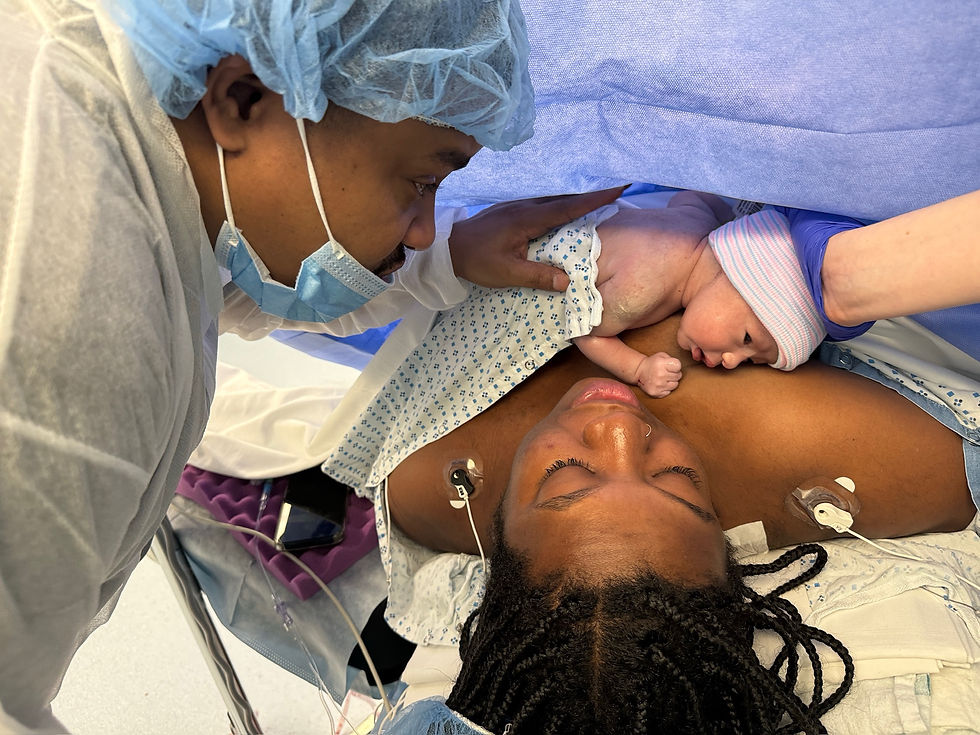
Having to be physically separated from my daughter in those early days was harder than I expected.
Some women feel disconnected from the birth experience or grieve the loss of their envisioned birth plan. That was my reality for sure, learning to mourn my plan, and learning to mourn how I envisioned my family to show up for me at the hospital.
Learning that it was okay to feel those feelings.
Breastfeeding was another difficulty, trying to lay the baby against my body while my abdomen was on fire was definitely not a part of my plan. I couldn’t even breastfeed the way I wanted to. The pressure of her body on my incision was unbearable. I tried using a Boppy pillow, but it still hurt.
So I had to turn to pumping—still a painful and stressful process, especially with sleepless nights, night sweats, and hormonal chaos. It's not news that increased reliance on pumping, which adds to the mental and physical stress during recovery.
You think you’ll come home to rest. But rest doesn’t live in homes with newborns and stitches.
Recovery is not one-size-fits-all. There’s no gold medal for how you deliver your baby.
I didn’t take the easy way out—I took the only way out that kept us both alive.

Comments